The Cultural Significance of a New Jay-Z Album in the Contemporary Hip-Hop Media Landscape
Justin C. Hamby
The prospect of a new Jay-Z album warrants serious consideration not merely as a musical event, but as a culturally significant moment within hip-hop more broadly. Since the release of 4:44 in 2017, both hip-hop culture and its surrounding media ecosystem particularly Black-owned platforms have undergone rapid and substantive transformation. A new project by Jay-Z would not only contribute to the artistic canon of hip-hop, but could also meaningfully engage and elevate the expanding infrastructure of Black-owned media that has emerged in the intervening years.
Jay-Z’s evolution from a mainstream rap figure associated with youth-oriented outlets such as 106 & Park to a global cultural icon featured prominently in institutions like The New York Times reflects both personal and professional growth. However, this evolution raises an important cultural question: whether such ascension necessitates distance from the grassroots platforms that have historically sustained hip-hop culture. A promotional campaign centered on Black-owned podcasts and media outlets would reaffirm Jay-Z’s continued engagement with the communities and cultural institutions that developed alongside his career.
Since 4:44, the podcast industry particularly within hip-hop has expanded dramatically. Artists, athletes, and cultural figures who once relied on traditional media have transitioned into podcast journalism, creating spaces that privilege long form dialogue, peer-based interviewing, and cultural authenticity. Notably, many of Jay-Z’s contemporaries and peers now host or regularly appear on these platforms, providing a unique opportunity for nuanced reflection on his artistic legacy and cultural impact.
For instance, Drink Champs, which debuted in 2016, represents one of the most influential hip-hop podcasts of the past decade. Hosted by N.O.R.E. and DJ EFN both longstanding supporters of Jay-Z’s business ventures the program’s informal and celebratory format would allow for a candid exploration of Jay-Z’s career. The contrast between N.O.R.E.’s energetic interviewing style and Jay-Z’s reserved demeanor could yield valuable cultural dialogue rooted in shared history.
Similarly, Joe and Jada, which launched in 2025 and is hosted by Fat Joe and Jadakiss, offers a peer-based platform uniquely suited for historical reflection. Fat Joe’s extensive involvement in hip-hop history, combined with Jadakiss’s status as a respected New York lyricist, would enable a discussion grounded in firsthand experience of hip-hop’s so-called “Golden Era.” Such peer interviews arguably provide a level of authenticity and cultural depth that mainstream outlets often cannot replicate.
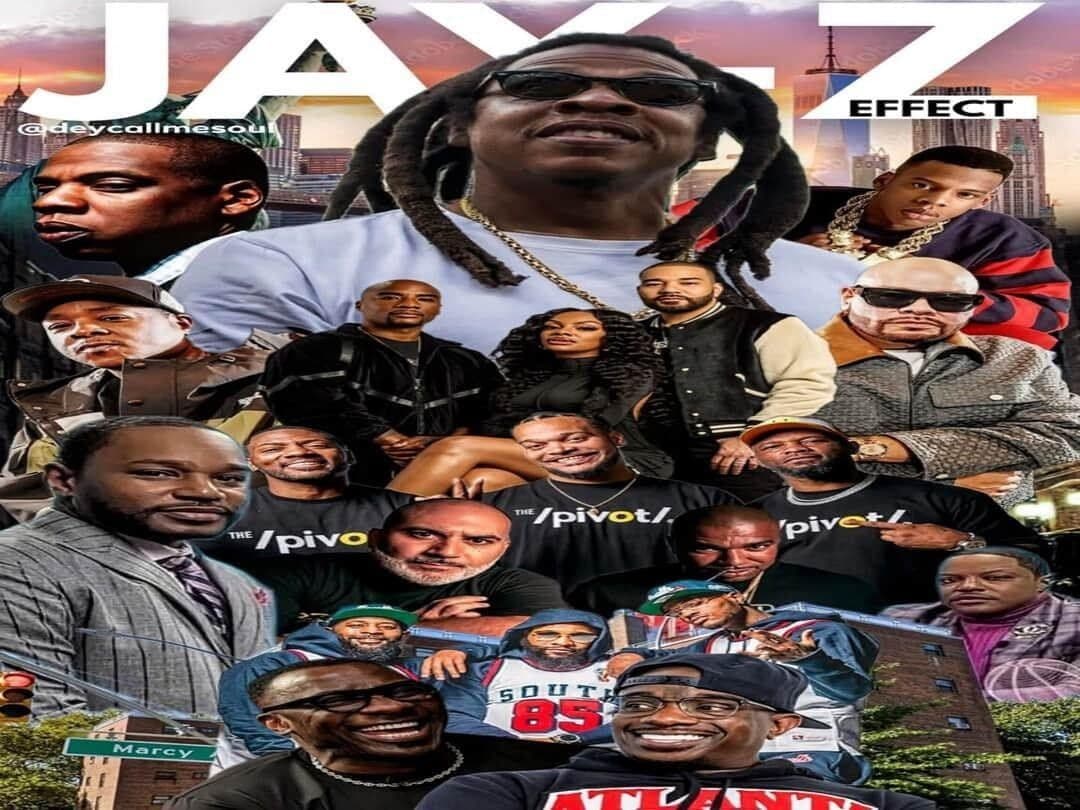
Additional platforms such as The 85 South Show and Club Shay Shay further illustrate the diversity of contemporary Black-owned media spaces. The 85 South Show’s unscripted comedic format would place Jay-Z in an unconventional environment that highlights cultural humility and accessibility. In contrast, Club Shay Shay, hosted by Shannon Sharpe, offers a more structured yet probing interview style, allowing for discussions on business ownership, brand evolution, and Jay-Z’s role in major cultural institutions such as the Super Bowl halftime show. Sharpe’s background as a professional athlete and media personality uniquely positions him to examine Jay-Z’s intersections with sports, entertainment, and Black entrepreneurship.
Likewise, The Pivot Podcast hosted by former NFL players Ryan Clark, Fred Taylor, and Channing Crowder represents another important Black-owned platform that blends sports, culture, and social justice discourse. Given Jay-Z’s involvement in criminal justice reform and social advocacy, this platform could facilitate substantive conversations that extend beyond music into broader societal issues.
Programs such as It Is What It Is, hosted by Cam’ron and Ma$e, further demonstrate how reconciliation, conflict resolution, and long-standing industry relationships can be examined constructively. Addressing historical tensions within Roc-A-Fella Records in a reflective manner could serve as a case study in conflict, growth, and reconciliation within Black-owned enterprises.
Emerging platforms such as Big Bank’s Perspektives podcast also merit consideration. As a voice closely connected to street-level narratives, Big Bank’s interviewing approach emphasizes lived experience and transformation. A discussion centered on Jay-Z’s transition from illicit economies to legitimate entrepreneurship would offer valuable insight into themes of discipline, reinvention, and generational responsibility.
Finally, a return to The Breakfast Club now featuring a restructured cast would complete a comprehensive media tour. Given the program’s prominence and Jay-Z’s prior relationship with its hosts, such an appearance would allow for reflection on personal, professional, and cultural developments over the past decade.
Collectively, these Black-owned platforms represent a powerful promotional and cultural apparatus. Strategically engaging them could plausibly position a new Jay-Z album as one of the most commercially successful and culturally resonant releases in decades. When paired with production from both legendary and contemporary producers, and collaborations with artists spanning multiple generations, such a project would not merely be nostalgic it would serve as a definitive cultural statement.
In this context, a new Jay-Z album would function not only as artistic expression, but as cultural intervention bridging generations, reaffirming community ties, and reinforcing the centrality of Black-owned media within hip-hop’s evolving ecosystem.